Understand Jumping Behaviour: Learn the common reasons dogs jump, including attention-seeking, excitement, and learned behavior
Create Safer Greetings: Transform potentially unsafe interactions into calm and controlled greetings, especially important for children and elderly guests
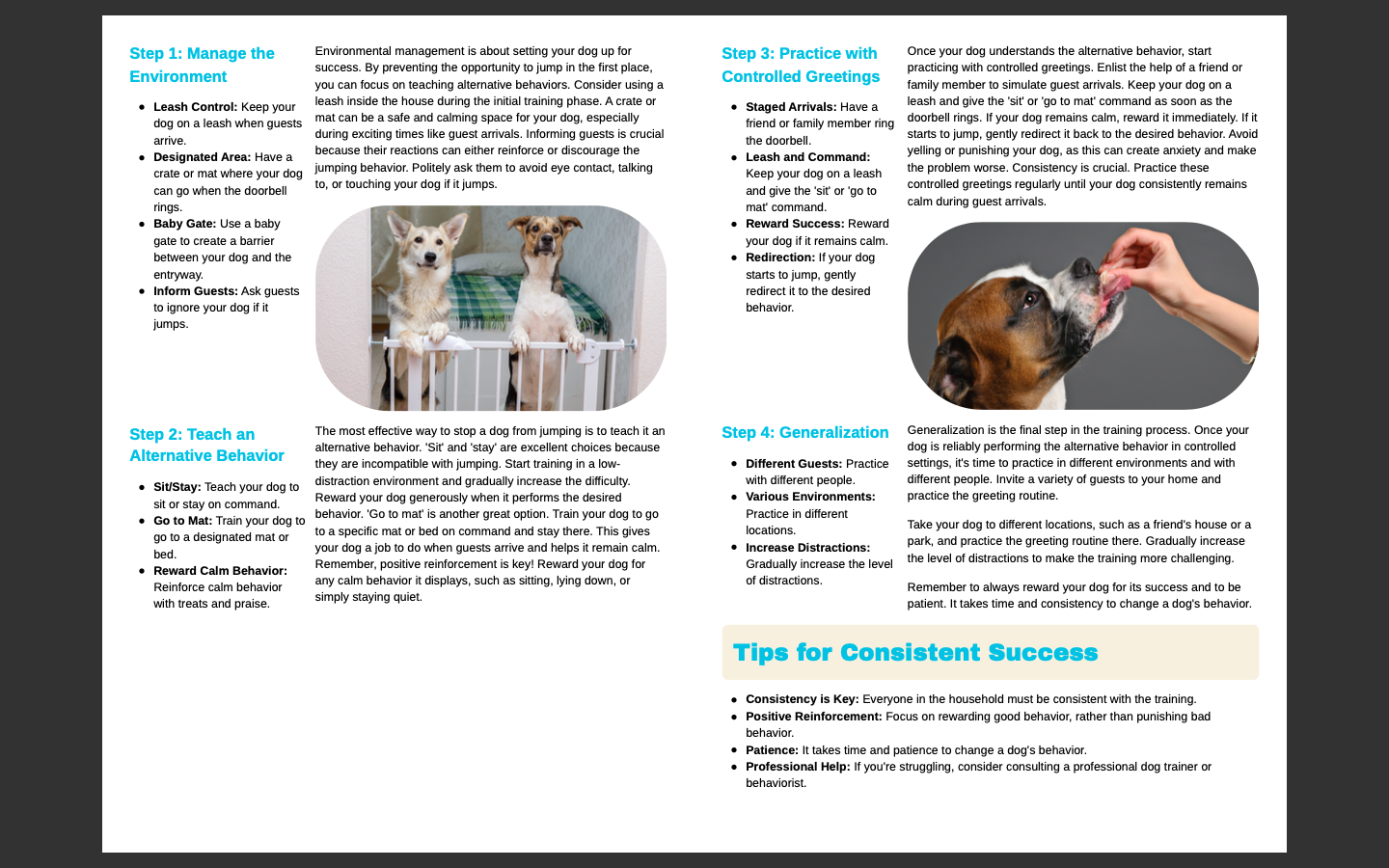
Manage the Environment: Discover how to set your dog up for success by using leashes, designated areas (crates/mats), and baby gates to prevent jumping opportunities
Teach Alternative Behaviours: Learn to train your dog in incompatible behaviours like 'sit/stay' or 'go to mat' to replace jumping

Utilise Positive Reinforcement: Emphasises rewarding calm and desired behaviours with treats and praise, rather than punishing unwanted actions
Practice Controlled Greetings: Implement staged arrivals with friends or family to practice greeting routines in a controlled manner
Generalise Training: Extend training to various environments and with different people to ensure consistent behaviour in all situations
Ensure Consistency: Highlights the importance of everyone in the household being consistent with training efforts

Professional Help Guidance: Advises seeking help from a professional dog trainer or behaviourist if challenges persist