AI Confidence Academy
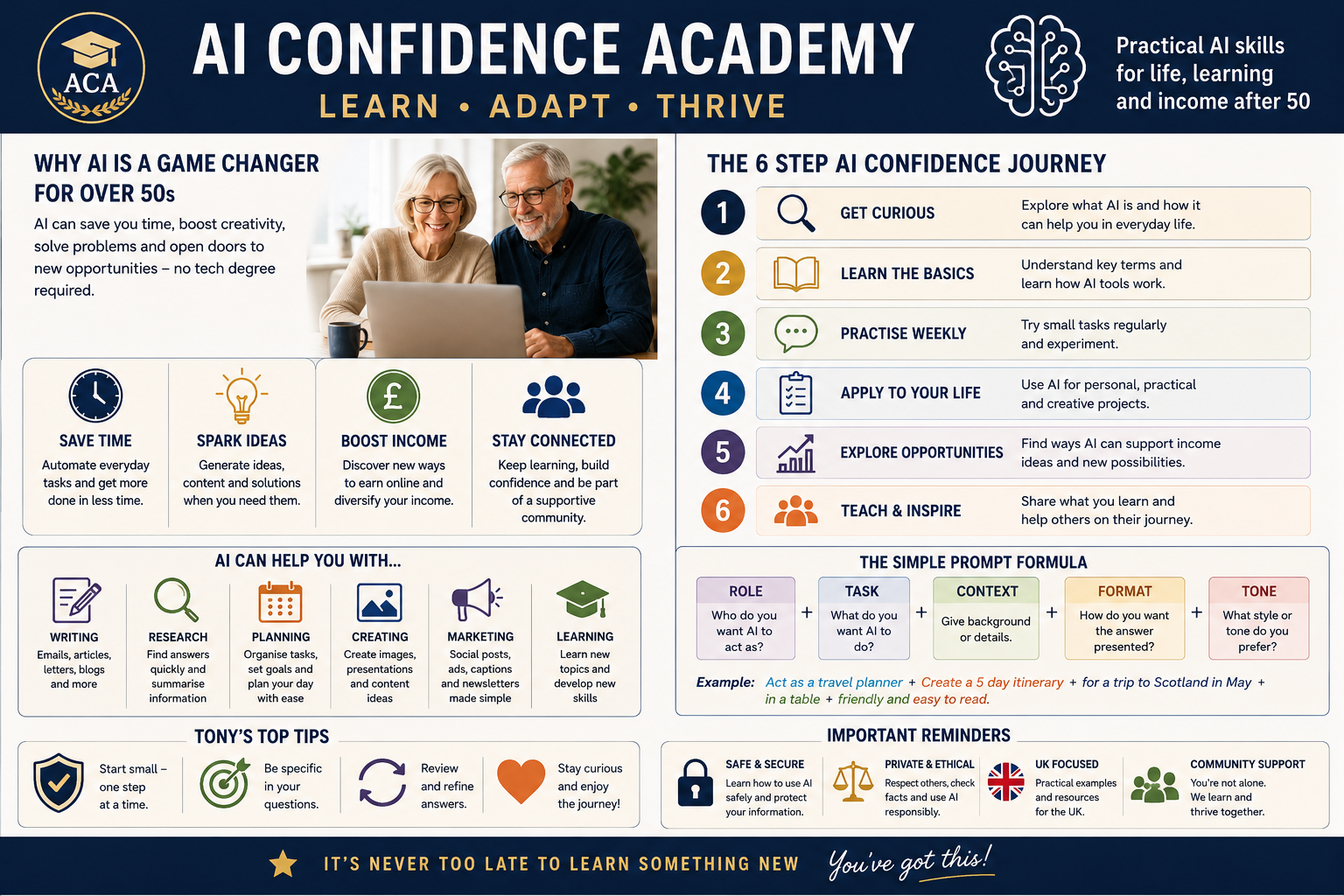
Avoid these common pitfalls and you'll learn faster, get better answers and enjoy using AI much more
Reading Time: 12–15 minutes
Difficulty: Beginner
60-Second Summary
Learning to use ChatGPT is much like learning to drive a car or use a new smartphone. Nobody gets everything right immediately, and that's perfectly normal.
The encouraging news is that most beginners make exactly the same mistakes. Once you recognise them, they're easy to overcome.
In this article, we'll look at the most common errors people make when starting with ChatGPT and, more importantly, how to avoid them. By the end, you'll feel more confident, ask better questions and get far more useful answers.
Introduction
One of the questions I'm asked most often is:
"Am I using ChatGPT properly?"
My answer is almost always the same.
There isn't a single "correct" way to use it.
When I first started experimenting with AI, I expected every answer to be perfect. If ChatGPT misunderstood me, I assumed I was doing something wrong or that the technology simply wasn't very good.
What I gradually realised was that ChatGPT is much like talking to another person. The clearer you explain what you want, the better the response you're likely to receive.
Learning to use AI isn't about mastering complicated technology. It's about learning to have better conversations.
The good news is that this skill develops naturally with practice.
Let's look at the mistakes almost everyone makes during their first few weeks—and how you can avoid them.
Mistake 1 – Asking Questions That Are Too Vague
One of the biggest mistakes beginners make is assuming ChatGPT can guess exactly what they're thinking.
Imagine walking into a travel agent and saying:
"Tell me about holidays."
Where?
When?
What sort of holiday?
What's your budget?
The question is simply too broad.
The same applies to ChatGPT.
Instead of asking:
"Tell me about gardening."
Try:
"I'm new to gardening in the UK. What vegetables are easy to grow in raised beds during spring?"
Notice how much more information you've provided.
The more context you give, the more tailored the answer becomes.
Mistake 2 – Expecting the Perfect Answer First Time
Many beginners think that if the first answer isn't exactly what they wanted, they've failed.
Nothing could be further from the truth.
Think of ChatGPT as a conversation, not a vending machine.
If the answer isn't quite right, simply say:
"Could you make that shorter?"
"Can you explain it in simpler language?"
"Could you give me three examples?"
"Can you rewrite it for someone who's completely new to this?"
Every follow-up question improves the conversation.
Mistake 3 – Being Afraid to Experiment
Some people worry they'll "break" ChatGPT by asking the wrong question.
You won't.
There isn't a secret button that causes everything to go wrong.
The best way to learn is to experiment.
Ask serious questions.
Ask fun questions.
Ask practical questions.
Every conversation teaches you something about how AI works.
Remember, curiosity is your greatest teacher.
Mistake 4 – Thinking AI Is Always Right
This is an important one.
ChatGPT is an incredibly useful assistant, but it isn't perfect.
Sometimes it may misunderstand a question.
Occasionally it may present information that's incomplete or inaccurate.
That's why your own judgement remains essential.
If you're making an important decision about money, health or legal matters, always verify the information using trusted sources or seek professional advice.
Think of AI as an adviser, not an authority.
Mistake 5 – Asking One Huge Question
Sometimes beginners type enormous paragraphs covering five or six different topics.
The result can be confusing because ChatGPT tries to answer everything at once.
Instead, break large tasks into smaller steps.
For example, rather than asking:
"How do I start an online business?"
You might ask:
What types of online businesses suit retirees?
Which require the smallest investment?
Which can be run from home?
How much time might they take?
What skills would I need?
By asking one question at a time, you'll build a much clearer understanding.
Mistake 6 – Not Giving Enough Background
Imagine asking:
"Write me a letter."
A letter to whom?
About what?
Formal or informal?
Without background information, ChatGPT has to guess.
Instead, explain your situation.
For example:
"Please write a polite email to my energy supplier asking why my latest bill is much higher than usual. Keep it friendly but firm."
The additional detail makes all the difference.
Mistake 7 – Forgetting You Can Ask for Different Styles
One of ChatGPT's greatest strengths is its flexibility.
If you don't like the first version, ask for another.
You could say:
"Make it shorter."
"Use plain English."
"Add more humour."
"Make it more professional."
"Explain it as if you're talking to a beginner."
"Turn it into a checklist."
You're not limited to one response.
Mistake 8 – Trying to Learn Everything in One Day
Artificial intelligence is exciting.
It's easy to spend hours watching videos, reading articles and trying dozens of tools.
Before long, everything becomes overwhelming.
There's no rush.
Spend just fifteen or twenty minutes each day experimenting.
Small, regular sessions are far more effective than trying to learn everything over a weekend.
Learning AI is a journey, not a race.
Five Simple Habits That Will Make You Better at Using ChatGPT
As your confidence grows, try adopting these habits:
1. Be specific.
Give clear instructions and enough background.
2. Ask follow-up questions.
Rarely stop after the first answer.
3. Experiment.
Try different ways of asking the same question.
4. Stay curious.
Explore topics you've always wanted to understand.
5. Keep practising.
Every conversation improves your skills.
Tony's Top Tip
One of the best prompts I've discovered is wonderfully simple:
"How could I improve this prompt to get a better answer?"
ChatGPT will often help you write a better question before answering it.
It's like having a coach sitting beside you.
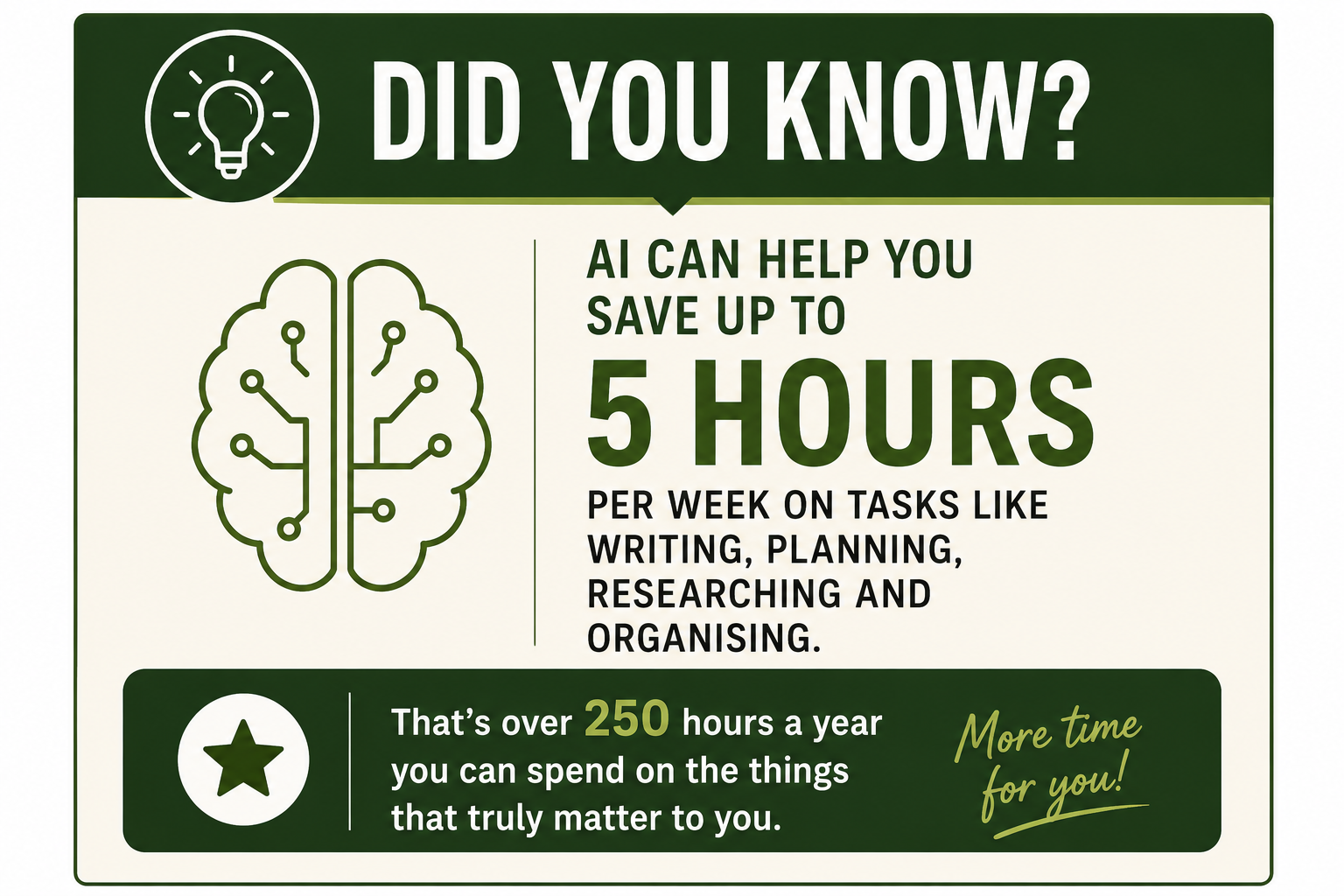
Professional AI users rarely settle for the first response. They refine, clarify and improve their prompts through conversation. That's exactly what beginners should do as well.
Common Mistakes at a Glance
Asking vague questions.
Expecting perfection first time.
Being afraid to experiment.
Assuming AI is always correct.
Asking too many questions at once.
Providing too little background.
Forgetting to request different styles.
Trying to learn everything immediately.
Action Checklist
This week:
☐ Rewrite one vague prompt into a detailed one.
☐ Ask at least three follow-up questions.
☐ Try asking ChatGPT to explain something in plain English.
☐ Ask it to rewrite an answer in a different style.
☐ Save your best conversation so you can refer to it later.
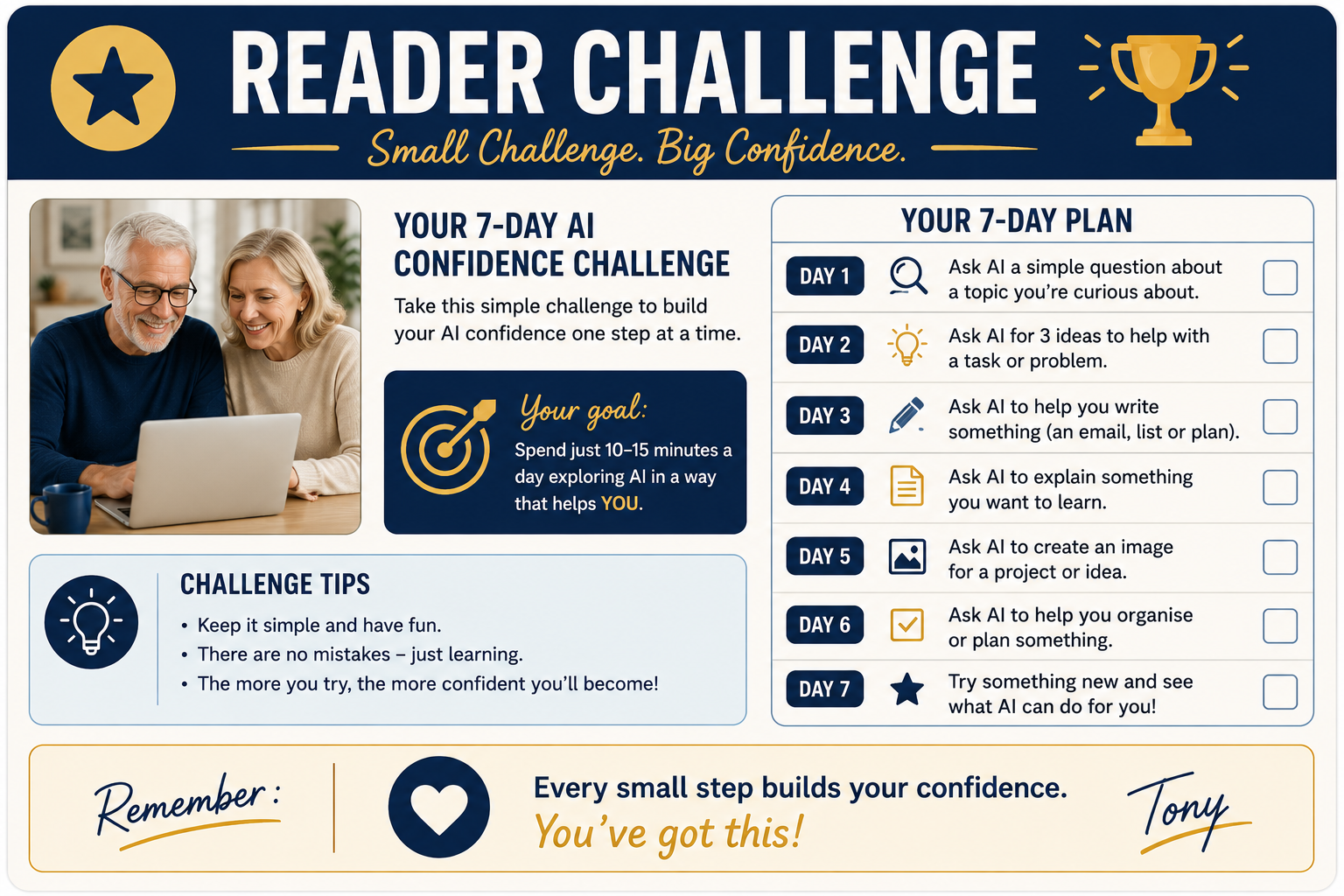
Choose one everyday task—perhaps planning a meal, writing an email or organising a short trip.
Instead of accepting the first answer, spend ten minutes improving it through conversation.
Notice how much better the final result becomes.
Related Reading
Why It's Never Too Late to Learn AI
Five Reasons Retirees Make Excellent AI Users
My First Week Using Artificial Intelligence
How AI Can Save You Hours Every Week
Newsletter Invitation
If you'd like more practical tips like these, subscribe to The Restless Retiree Letter.
Each week I share simple, jargon-free advice to help you use AI with confidence, discover useful tools and make technology work for you—not the other way around.

Just drop me an email and I'll add you to the list

Tony's Takeaway
One of the most important lessons I've learned is that becoming good at using ChatGPT isn't about being technical.
It's about being willing to have a conversation.
Ask a question.
Read the answer.
Ask another.
Refine it.
Learn from it.
That's how confidence grows.
Don't worry about making mistakes. Every experienced AI user started exactly where you are now—wondering if they were doing it properly.
Keep asking questions, keep experimenting and keep learning.
Before long, you'll look back and realise those early mistakes weren't setbacks at all. They were simply the first steps on an exciting journey.
cheers
Tony
Want to keep in touch? Here's how:
- Aug 30
The Biggest Beginner Mistakes When Using ChatGPT
- Tony Phelps
- Extra Income in Retirement, AI & Technology
- 0 comments